Updated October 4, 2026 planning snapshot: typical full asphalt re-roof $8,500–$22,000 installed after tear-off · architectural asphalt often $4.50–$7.50/sq ft · labor is commonly ~55–65% of the invoice. Late October: clear leaves, then book inspections while November dates are still open. Hurricane season runs through November 30. Northern tear-offs depend on the shingle temperature label. Editorial ranges — not contractor quotes.
How much does a new roof cost in 2026 for a typical U.S. home? The average roof replacement cost most homeowners can plan around is $8,500 to $22,000 for a full asphalt replacement after tear-off. Metal and designer systems run higher. Exact totals swing with square footage, pitch, decking repairs, materials, and local labor — not a single national average.
Start with our free roof cost calculator — set your state for labor adjustments — then read state guides below, learn to read a roofing quote line by line, and use the contractor vetting checklist before you sign.
Pages readers compare next to this national band: new roof cost in Ohio, Texas roof replacement cost, Washington roof replacement cost, Portland and Oregon roof cost, New York roof replacement cost, and Georgia roof replacement cost. The bands come from the calculator methodology. Material choices: roofing shingles compared and metal roofing panels.
Cost by roofing material (installed)
Installed $/sq ft and whole-roof totals below assume a straightforward single-story job after tear-off. Steep pitches, multi-story access, and second-layer tear-off push totals up. Totals column uses a ~1,700–2,000 sq ft footprint band for apples-to-apples scanning.
| Material | Installed $/sq ft | Typical whole-roof band* | Research next |
|---|---|---|---|
| Architectural asphalt | $4.50–$7.50 | $8,500–$18,000 | Best shingles 2026 |
| Premium / designer asphalt | $7.00–$11.00 | $14,000–$24,000 | Shingle brands compared |
| Exposed-fastener metal | $7.00–$11.00 | $12,000–$24,000 | Metal panels guide |
| Standing-seam metal | $10.00–$16.00+ | $18,000–$40,000+ | Standing seam notes |
| Tile (concrete / clay) | $8.00–$18.00 | $16,000–$45,000 | Structure + underlayment capacity first |
| Slate | $20.00–$35.00+ | $40,000–$70,000+ | Specialty crew + decking load check |
*Planning bands only — not a bid. Footprint understates roof area: a 2,000 sq ft ranch on medium pitch may quote near 22–28 squares (100 sq ft per square).
Cost by house size (architectural asphalt)
Rough installed totals after tear-off on a single-story, medium-pitch home. Use the calculator for pitch, layers, and state labor.
| Approx. home footprint | Planning re-roof band |
|---|---|
| 1,200 sq ft | $6,000–$11,000 |
| 1,500 sq ft | $7,500–$14,000 |
| 1,700–1,800 sq ft | $8,500–$16,000 |
| 2,000 sq ft | $9,500–$18,000 |
| 2,500 sq ft | $12,000–$22,000 |
| 3,000 sq ft | $14,000–$27,000+ |
Labor vs materials
On many asphalt jobs, labor is about 55–65% of the total and materials (including underlayment and accessories) make up the rest. That is why the cheapest shingle bundle rarely moves the invoice as much as crew time, tear-off layers, and decking repairs. Low outlier bids often hide missing labor scope — not “better pricing.”
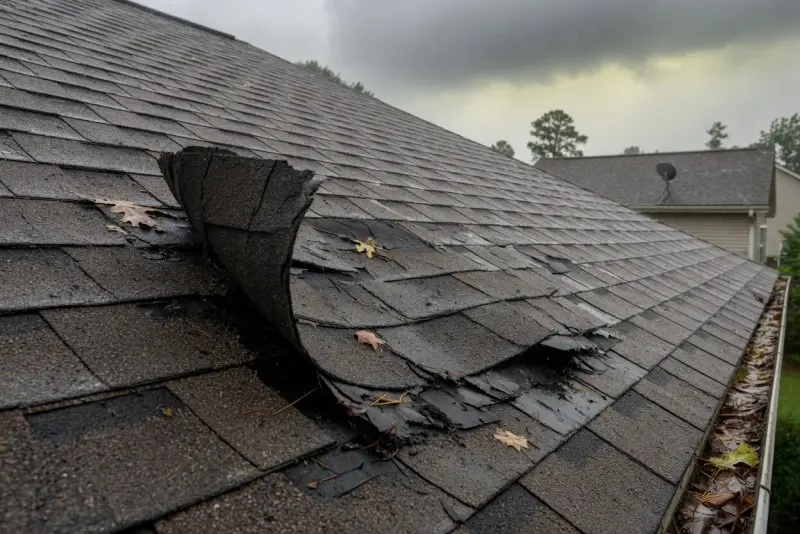
Tear-off and disposal
Removing existing roofing is usually line-itemed. Overlay (install over old shingles) can look cheaper now but skips deck inspection and may cost more on the next roof.
| Existing cover | Removal / disposal (planning) |
|---|---|
| One layer asphalt | Often $0.40–$1.00/sq ft · included or separate on bid |
| Two layers asphalt | Adds labor + landfill weight — common change-order driver |
| Wood shakes | Higher disposal; check local landfill rules |
| Tile / slate | $1.00–$2.00+/sq ft handling · specialty crews |
System add-ons that belong on every bid
These are not “upsells” when they match code and climate — they are the waterproofing system. Demand SKUs and quantities in writing.
| Line item | Planning cost cue | Why it matters |
|---|---|---|
| Synthetic underlayment | ~$0.50–$1.50/sq ft material range | Underlayment guide |
| Ice & water shield | Eaves/valleys — climate-dependent | Ice dams, wind-driven rain |
| Decking repair | ~$2–$4/sq ft when plywood is soft | Discovered after tear-off — budget contingency |
| Drip edge, flashing, pipe boots | Per linear ft / each on bid | Flashings & boots |
| Ridge vent / attic ventilation | Scope + intake balance | Ventilation guide |
| Permits & disposal | Should be explicit line items | Avoid invoice surprises |
What moves your number
- Tear-off layers: Two-layer removal adds labor and disposal
- Decking: Soft plywood discovered mid-job is a common change order
- Pitch & access: Harness time, tight lots, and staging premiums
- Accessories: Underlayment, ice-and-water shield, ridge vent, pipe boots — belong in scope
- Permits & disposal: Should be line items, not surprises at invoice
- Storm / insurance work: See hail inspection process before you accept a “storm special”
Compare materials in our best shingles guide and metal panel review. For NC-depth walkthrough with regional labor notes, see 2026 NC roof costs. Manufacturer install and warranty docs live in our Homeowner & Tech Resource Library.
State roof cost guides
Labor and climate shift totals more than national averages suggest. Start with your state (33 guides):
- Texas roof replacement cost (2026)
- Florida roof replacement cost (2026)
- California roof replacement cost (2026)
- Georgia roof replacement cost (2026)
- Arizona roof replacement cost (2026)
- Colorado roof replacement cost (2026)
- Pennsylvania roof replacement cost (2026)
- Ohio roof replacement cost (2026)
- Virginia roof replacement cost (2026)
- North Carolina roof replacement cost (2026) · NC deep dive
- New Jersey roof replacement cost (2026)
- New York roof replacement cost (2026)
- Washington roof replacement cost (2026)
- Illinois roof replacement cost (2026)
- Michigan roof replacement cost (2026)
- Tennessee roof replacement cost (2026)
- Massachusetts roof replacement cost (2026)
- Indiana roof replacement cost (2026)
- Missouri roof replacement cost (2026)
- Maryland roof replacement cost (2026)
- Wisconsin roof replacement cost (2026)
- Minnesota roof replacement cost (2026)
- South Carolina roof replacement cost (2026)
- Alabama roof replacement cost (2026)
- Louisiana roof replacement cost (2026)
- Kentucky roof replacement cost (2026)
- Oklahoma roof replacement cost (2026)
- Connecticut roof replacement cost (2026)
- Oregon roof replacement cost (2026)
- Nevada roof replacement cost (2026)
- Utah roof replacement cost (2026)
- Kansas roof replacement cost (2026)
- Arkansas roof replacement cost (2026)
- Roof repair vs replacement decision guide
Metal vs asphalt lifetime math
Asphalt wins upfront cost on most suburban homes; metal shifts spend toward longevity and lower maintenance on many sites. If solar is on the horizon, sequence matters — read roof before solar before you pick a covering for mount compatibility.
Calculator methodology
Our roof cost estimator uses installed $/sq ft baselines by material, then multiplies for pitch, tear-off layers, decking allowance, and a state labor index (for example NC ≈0.93, CA ≈1.28). Results show a ±15% planning band — permits, chimneys, skylights, and steep-lot staging sit outside that band. This is editorial modeling, not a contractor quote. Deep NC methodology: roof cost NC walkthrough.
Compare three bids fairly
- Demand identical line items across quotes: tear-off, underlayment SKU, shingle line, valley method, ventilation, warranty, permits, disposal — use how to read a roofing quote
- Use the quote reality check and quote comparison scorecard when a number feels out of band
- Budget 10–15% contingency beyond the lowest bid for decking surprises on older homes
- Vet crews with license, insurance, and reference checks
- Confirm warranty language — see what voids a shingle warranty
- Print the quote comparison sheet and pre-quote photo checklist
Paying for the project
Cash or HELOC often wins on total cost; installer-sponsored solar loans may hide dealer fees. See home improvement financing and stack HEAR rebates before you borrow for related efficiency work.
Frequently asked questions
How much does a new roof cost in 2026?
Many U.S. asphalt replacements land between $8,500 and $22,000 installed after tear-off — metal and complex roofs run higher. Use our calculator with your state selected.
What is the biggest cost driver on roof bids?
Labor, tear-off layers, and decking repairs often dominate — not shingle bundle sale price online.
How many quotes should I get?
Three itemized scopes minimum — match underlayment, ventilation, permits, and disposal before picking the lowest rate.
Does homeowners insurance pay for a new roof?
Often after covered hail or wind with deductible — age-related wear is usually excluded; ask your agent before assuming coverage.
Run your numbers first
As an Amazon Associate, RoofingHut earns from qualifying purchases. Some links are affiliate links, which may earn us a commission at no extra cost to you. Tax and incentive details change — verify with your CPA, utility, and installer.