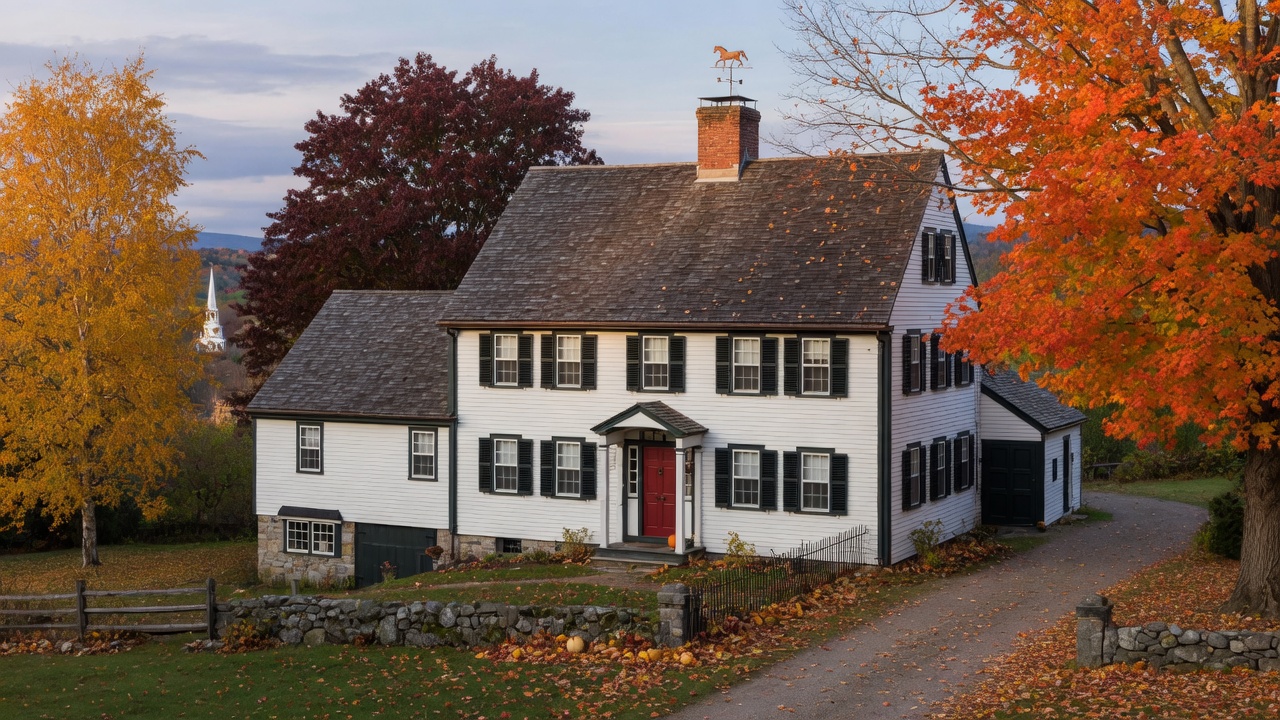
Connecticut 2026 planning snapshot: architectural asphalt often $5.75–$9.50/sq ft installed · typical ~2,000 sq ft home re-roof roughly $13,225–$25,650 after tear-off · set calculator state to CT. Editorial ranges — not contractor quotes.
Advertisement
Planning a roof replacement in Connecticut? Use our free roof cost calculator — set your state to CT for labor-adjusted ranges — then compare three local quotes before you sign. This 2026 guide covers installed price bands, what moves bids in Connecticut, and where to research next.
Need national context first? Read our U.S. roof replacement cost guide (material, size, tear-off, and add-on tables), then return here for CT-specific notes. Learn to read a roofing quote line by line before you pick a crew.
Typical Connecticut roof replacement costs (2026)
Most Connecticut homeowners with a ~2,000 sq ft footprint and medium pitch see total installed costs in a broad band after tear-off and pitch factor — often higher in metros and lower in rural counties. Connecticut labor indexes above national average — Hartford, New Haven, and Fairfield County often exceed rural eastern CT bids by 12–20%.
Cost by material in Connecticut (installed)
$/sq ft ranges below are planning bands for straightforward single-story jobs after tear-off. Steep pitches, multi-story access, and second-layer tear-off push totals up. Whole-roof column uses a ~2,000 sq ft footprint / medium pitch for scanning.
| Material | Installed $/sq ft (CT) | ~2,000 sq ft home band* |
|---|---|---|
| Architectural asphalt | $5.75–$9.50 | $13,225–$25,650 |
| Premium / designer asphalt | $7.76–$13.78 | $17,854–$37,192 |
| Exposed-fastener metal | $9.00–$14.50 | $20,700–$39,150 |
| Standing-seam metal | $12.15–$21.75+ | $27,945–$58,725+ |
*Planning only. A 2,000 sq ft footprint with medium pitch often quotes near 22–28 roofing squares (100 sq ft per square).
Cost by house size in Connecticut
Architectural asphalt installed after tear-off — single-story, medium pitch planning bands from CT $/sq ft baselines. Run the calculator for pitch, layers, and decking contingency.
| Approx. home footprint | Planning re-roof band (CT) |
|---|---|
| 1,200 sq ft footprint | $7,935–$15,390 |
| 1,500 sq ft footprint | $9,919–$19,238 |
| 1,800 sq ft footprint | $11,902–$23,085 |
| 2,000 sq ft footprint | $13,225–$25,650 |
| 2,500 sq ft footprint | $16,531–$32,062 |
| 3,000 sq ft footprint | $19,837–$38,475 |
Labor vs materials in Connecticut
On many asphalt jobs, labor is about 55–65% of the invoice. Connecticut labor indexes above national average — Hartford, New Haven, and Fairfield County often exceed rural eastern CT bids by 12–20%. That is why the cheapest shingle bundle rarely moves the bid as much as crew days, tear-off layers, and decking repairs.
Translate squares: a 2,000 sq ft footprint with medium pitch often quotes near 22–28 roofing squares. Run the roof cost estimator with CT selected, then sanity-check bids with our contractor vetting checklist and quote reality check.

Metro vs rural labor in Connecticut
Hartford, New Haven, Stamford, and Bridgeport metros typically exceed rural eastern Connecticut bids — dense suburban staging adds labor.
Travel, disposal distance, and staging (tight suburban lots vs open rural driveways) change crew days even when material SKUs match. Ask each bidder whether permit fees, dumpster, and sales tax are included — omitted lines skew comparisons.
Tear-off, disposal & system add-ons
Demand these as line items — not “included” without quantities. National price cues live on our national cost tables; CT labor still multiplies crew time.
| Line item | What to require on the bid |
|---|---|
| Tear-off layers | One vs two layers priced separately — second layer adds labor + landfill |
| Underlayment / ice & water | Brand + coverage (eaves, valleys) — see underlayment guide |
| Decking allowance | $/sheet contingency for soft plywood after tear-off |
| Drip edge, flashing, pipe boots | Linear ft / each — flashings & boots |
| Ventilation | Ridge + intake balance — attic moisture notes |
| Permits & disposal | Most municipalities require permits — confirm fees and inspection milestones; coastal towns may add wind-rating notes. |
What drives your quote higher
- Multi-layer tear-off: Second layers add labor and landfill weight
- Decking repairs: Soft plywood after tear-off is a common change order — budget contingency
- Steep pitch & complexity: Valleys, dormers, and multi-story staging add harness time
- Accessories: synthetic roofing underlayment, ice and water shield roofing at eaves, roof ridge vent, and roof pipe boot flashing belong in scope — not surprises
- Storm / insurance work: Hail inspection process before you accept a storm special
- Permits & disposal: Most municipalities require permits — confirm fees and inspection milestones; coastal towns may add wind-rating notes.
Climate & material picks for Connecticut
Nor'easters, ice damming, and coastal humidity push ice-and-water shield and corrosion-resistant fasteners on shoreline towns.
Compare shingle wind and algae picks and corrugated metal panels when hail, wind, heat, or humidity drive your shortlist. Specify valley method (closed-cut vs woven) and ventilation plan in writing — vague "flashing included" scopes cause callbacks. Warranty traps: what voids a shingle warranty.
Building codes & permits in Connecticut
Most municipalities require permits — confirm fees and inspection milestones; coastal towns may add wind-rating notes.
Ask bidders to list AHJ permit fees, inspection milestones, and whether sales tax is included — omitted lines make comparisons misleading across counties.
Material picks for Connecticut climates
Ice damming and coastal wind favor full ice-and-water shield systems and rated shingles on exposed shoreline sites.
Shop editor-reviewed accessories in our roofing product finder and pull manufacturer install docs from the roofing manual library before you lock a SKU on quotes.
Nearby state roof cost guides
Compare neighboring labor markets in our national roof cost guide — set your state in the calculator for localized ranges.
Metal vs asphalt economics in Connecticut
Metal lasts longer but costs more day one. Exposed-fastener corrugated bridges some gap; standing seam is premium. If you are weighing metal partly for future solar mounts, read roof-before-solar sequencing before you order profiles — clamp compatibility varies by rib spacing.
Seasonal timing & booking
Nor'easter season drives emergency calls October through March — book permanent work in late spring.
Shoulder seasons can offer better crew availability than peak summer in some Connecticut markets — but cold installs affect nail seating on shingles. Build weather slack into contracts if you are listing a home or scheduling solar right after dry-in.
Compare three bids fairly
- Demand matching line items: tear-off layers, underlayment brand, shingle SKU, valley method, ventilation, warranty, disposal, permits — use how to read a roofing quote
- Photograph existing layers and attic stains before the first walk — helps adjusters and buyers later
- Use the quote reality check if a number feels out of band for your county
- Plan solar within five years? Model removal pricing now — see roof before solar
- Unsure repair vs full re-roof? Read repair vs replacement before you patch again
Stack incentives before you borrow
Federal HEAR efficiency rebates may offset insulation, wiring, or heat-pump work tied to a roof project — see our nationwide HEAR guide. For payment paths, read home improvement financing options and federal solar tax credit basics if panels follow the roof.
More Connecticut research
- National roof replacement cost pillar (full tables)
- NC roof cost walkthrough (deep methodology example — calculator works in CT)
- How to read a roofing quote
- Solar hub if you are pricing roof and panels together
- How to vet contractors
- Product finder — underlayment, sealants, vents
- Manual & tech library by trade
Ranges use RoofingHut calculator labor indices and published manufacturer specs — not contractor quotes. Last updated September 19, 2026. See our methodology.
Frequently asked questions
How much does a new roof cost in Connecticut in 2026?
Most Connecticut homes with a medium-pitch asphalt re-roof land in a broad installed band after tear-off — often higher in metros. Set CT in our roof cost calculator for a footprint-based range.
What roofing material is best for Connecticut weather?
Ice damming and coastal wind favor full ice-and-water shield systems and rated shingles on exposed shoreline sites.
Do I need a permit to replace my roof in Connecticut?
Most incorporated cities and many counties require permits for full replacements — confirm permit pull and inspection milestones are listed on written quotes.
How many roofing quotes should I get in Connecticut?
Three itemized scopes minimum — match tear-off layers, underlayment brand, ventilation, and disposal before you pick the lowest square-foot teaser rate.
As an Amazon Associate, RoofingHut earns from qualifying purchases. Some links are affiliate links, which may earn us a commission at no extra cost to you. Tax and incentive details change — verify with your CPA, utility, and installer.