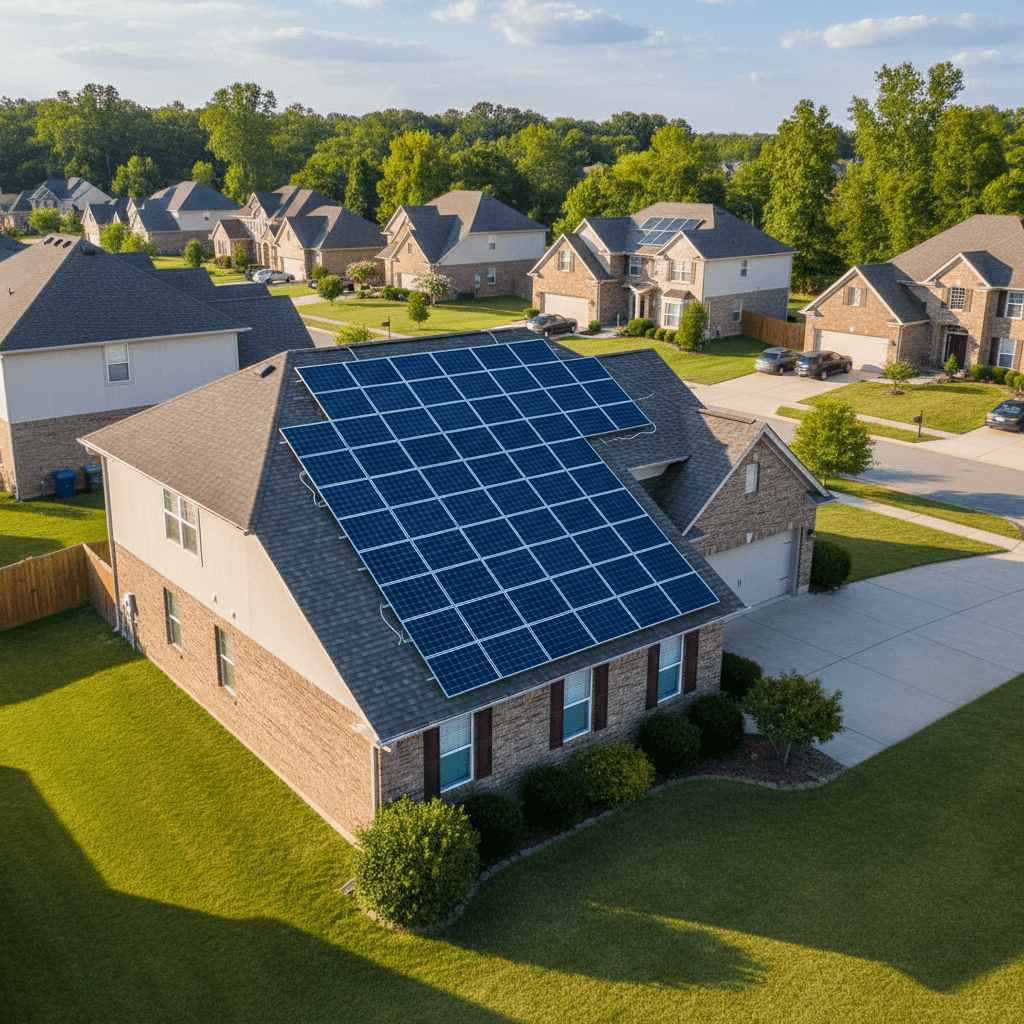
Homeowners should replace an aging or compromised roof before installing solar panels to avoid costly removal and reinstallation expenses later. Assessing the age, condition, and structural integrity of your shingles first ensures both systems remain protected under their respective warranties. Following this roofing vs solar homeowner research guide guarantees you maximize your investment while preventing future maintenance conflicts.
If you are comparing a roof replacement to solar panels, the real risk is not choosing the wrong product, it is spending money in the wrong order. Homeowners across North Carolina get pitched on energy savings and financing every day, but many never stop to ask whether their roof is ready to support a 25-year solar system, or whether a roof issue today could force expensive panel removal later. That is why this decision deserves careful research before you sign any contract. In this guide, you will learn how to evaluate roof condition, compare true project costs, understand key solar rules and installer requirements, and decide when it makes more sense to reroof first, go solar first, or combine both into one smarter project.
TL;DR: Should You Fix the Roof or Install Solar First?
Most homeowners should evaluate their roof's age, condition, structure, and warranty before choosing between a roof project and solar. If your roof requires replacement within the next 25 to 30 years, the typical lifespan of a solar array, it is smarter to replace the roof first or plan both together.
Installing panels on an aging roof often leads to a detach and reset fee later, which typically ranges from $3,000 to $7,000; however, you should always verify local quotes. Use this roofing vs solar homeowner research guide to avoid paying for labor twice by aligning your roof's longevity with your energy investment. Before you sign a contract, it is wise to compare roofing products and materials to ensure the surface beneath your panels can go the distance.
Roofing vs Solar: Why This Decision Is Really About Timing, Not Picking Sides
Many homeowners view roofing and solar as separate line items in a renovation budget. This is a mistake. In areas like Mooresville and Statesville, where the housing stock in growing suburbs is reaching the 15 to 20 year mark, these two projects are actually part of a single roof assembly decision. You are not choosing between energy savings and a dry home; you are managing a logistical timeline.
North Carolina's climate, characterized by intense summer heat, high humidity, and seasonal storm exposure, puts significant stress on asphalt shingles. If you install solar on a roof with only five years of life left, the environment in the Charlotte and Huntersville areas will likely necessitate a full tear-off long before the solar panels reach their peak ROI. Spending twice is the biggest financial risk. This roofing vs solar homeowner research guide encourages residents in Cornelius and Elkin to view the roof and solar panels as a unified system. Treating them as separate purchases ignores the structural reality that panels are anchored directly into your home's primary waterproofing layer. Aligning the installation timing ensures that your underlying materials can withstand North Carolina weather for the full 25 year duration of your solar agreement.
The 7 Questions Homeowners Should Research Before Spending Money on Roofing or Solar
Before you price panels or book a reroof, slow down and answer these seven research questions. This is where a good roofing vs solar homeowner research guide saves homeowners from making a visually reasonable decision that turns out to be expensive.
1. How old is the current roof? Roof age is the first filter, not curb appeal. Many asphalt shingle roofs in North Carolina begin raising questions well before they look terrible from the driveway, especially after years of heat, humidity, and storm exposure. If you do not know the install date, pull permit records, closing documents, or past contractor invoices.
2. How many years of life are realistically left? A roof does not need to be failing to be a poor solar candidate. Solar systems commonly stay in place for 25 to 30 years, so the roof underneath should have a similar remaining service life, or at least a defensible inspection-based estimate. Surface appearance alone is not enough here. A roof can look acceptable from the ground and still have brittle shingles, aging seal strips, or weak decking.
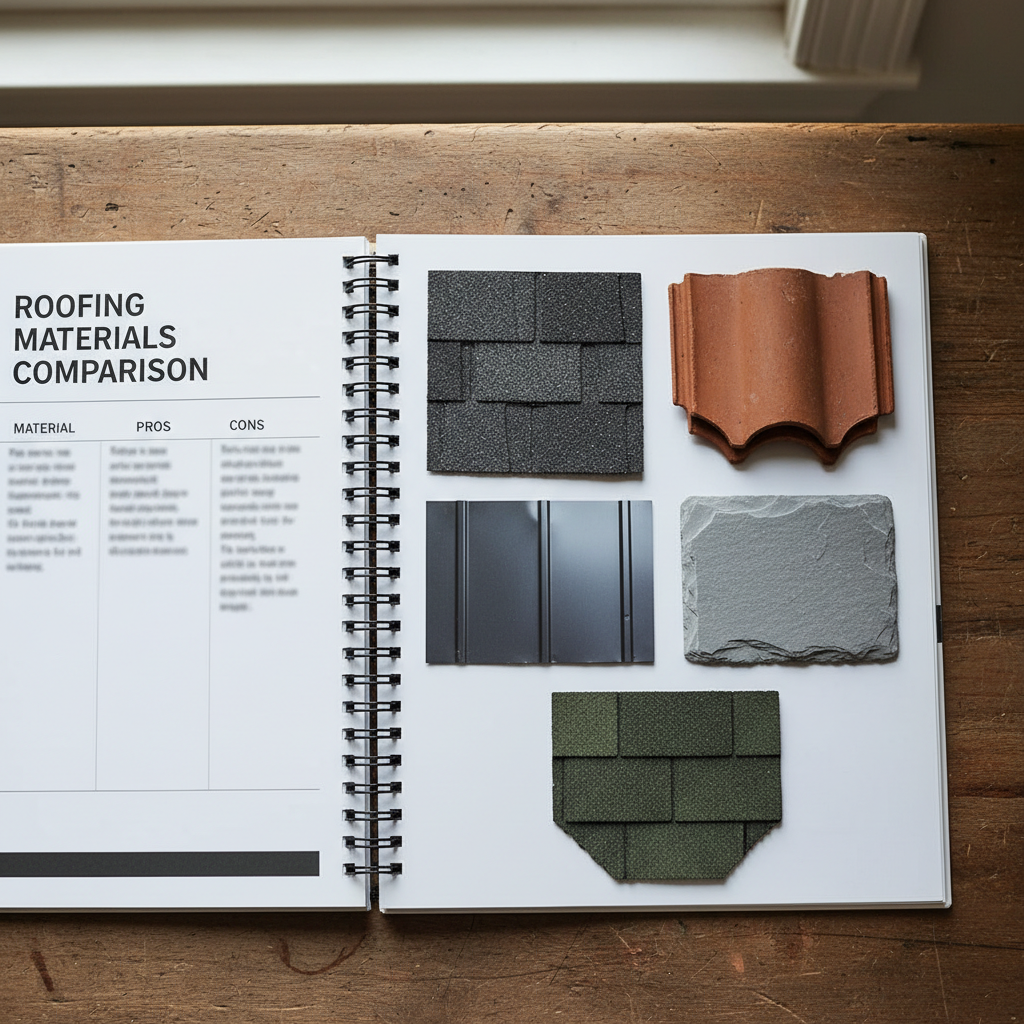
3. What roofing material is installed? Material matters. Asphalt shingles are common and often compatible with solar if they are still in solid condition, but older shingles can be damaged during installation or later service. Metal roofing can also be an excellent solar platform, especially standing seam systems that may allow attachment methods with fewer penetrations. Exposed-fastener metal roofs require closer review because details, fasteners, and aging patterns matter.
4. Is there any active leaking or decking damage? Any leak history, soft spots, stained ceilings, sagging areas, or known flashing problems should be resolved before panels go on. Solar is not a fix for a bad roof. It can make later repair access more complicated.
5. Does the roof have enough sun exposure and limited shading? Chimneys, tree cover, neighboring homes, and seasonal shade patterns can reduce production. In many Charlotte-area and lake-area neighborhoods, mature trees are a real factor, not a minor detail.
6. What happens to warranties after panel installation? Ask both the roofer and solar installer, in writing, how penetrations and attachment methods affect manufacturer warranties, workmanship coverage, and future repair responsibility.
7. What is the true combined cost over 20 to 30 years? Do not compare only today's invoice. Compare roof work, solar install, possible future detach and reset costs, and any overlap in labor or financing. That is the real math.
Before signing any solar contract, get an independent roof inspection. If you are still weighing material options, compare roofing products and materials first so you know what kind of roof assembly you are actually building under the panels.
Should I Replace My Roof Before Solar Panels? A Simple Decision Framework
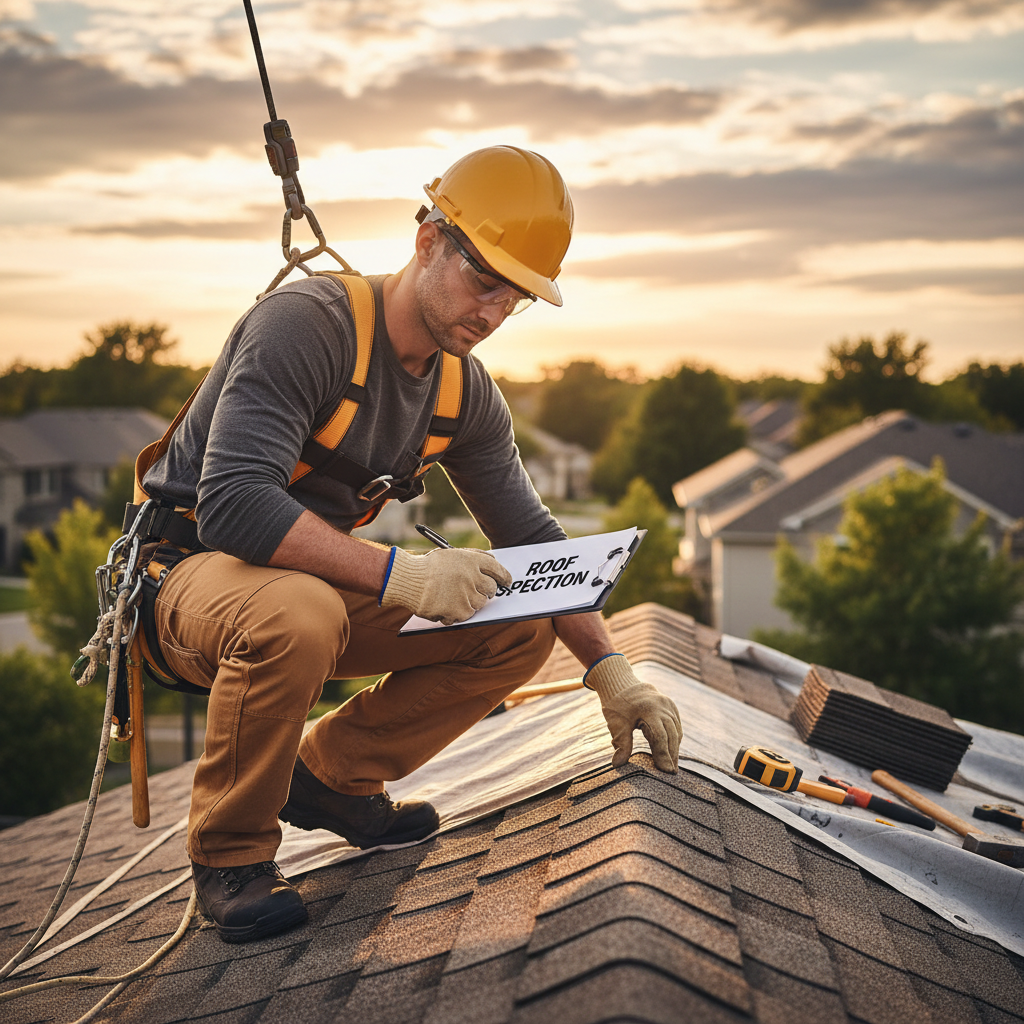
Once you have the answers from your initial inspection, the next step in this roofing vs solar homeowner research guide is mapping out a clear path forward. If you find yourself wondering, should I replace roof before solar panels, the decision comes down to aligning your surface's remaining structural integrity with the 25 to 30 year lifespan of a typical solar array.
To determine if you should get a new roof or solar panels first, apply this simple decision framework based on your current materials.
The Newer Roof If your roof is relatively new, shows no signs of storm damage, and has firm decking, it is likely suitable for immediate solar installation. You just need to confirm that adding mounting hardware will not void any existing manufacturer warranties.
The Mid-Life Roof This stage requires careful evaluation. A mid-life roof needs a formal inspection and a strict lifespan estimate. If a contractor spots early wear, previous patch repairs, or minor flashing issues, you must calculate the risk. If the materials will not realistically survive another 25 years, planning a roof replacement before solar makes better financial sense.
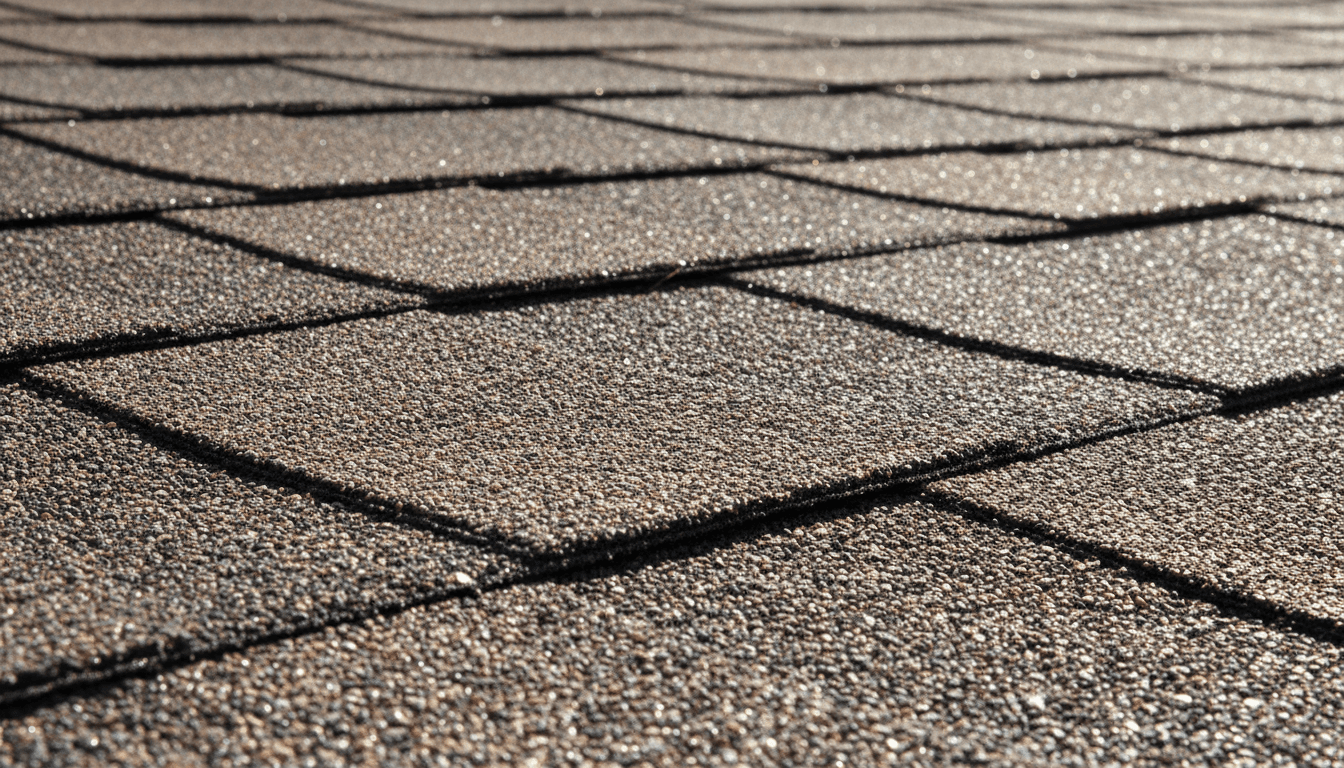
The Older or Failing Roof If your roof shows visible failure signs like curling shingles, heavy granule loss, soft decking, or a persistent leak history, you must replace it first. Putting solar panels over a deteriorating surface guarantees future complications and structural risks. Securing a sturdy, weather-tight waterproofing layer is a mandatory prerequisite before anchoring heavy electrical equipment to your home.
Roof Condition for Solar Panels: What Inspectors and Installers Look For
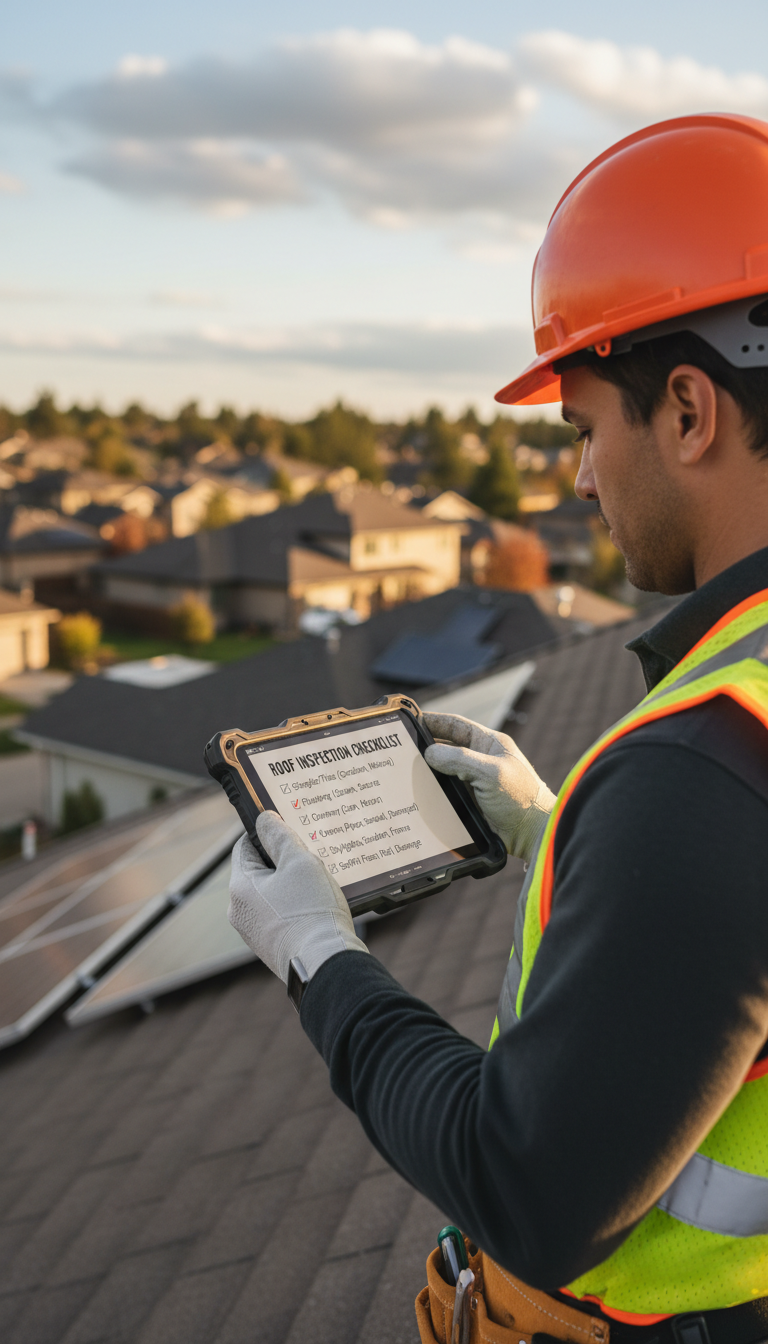
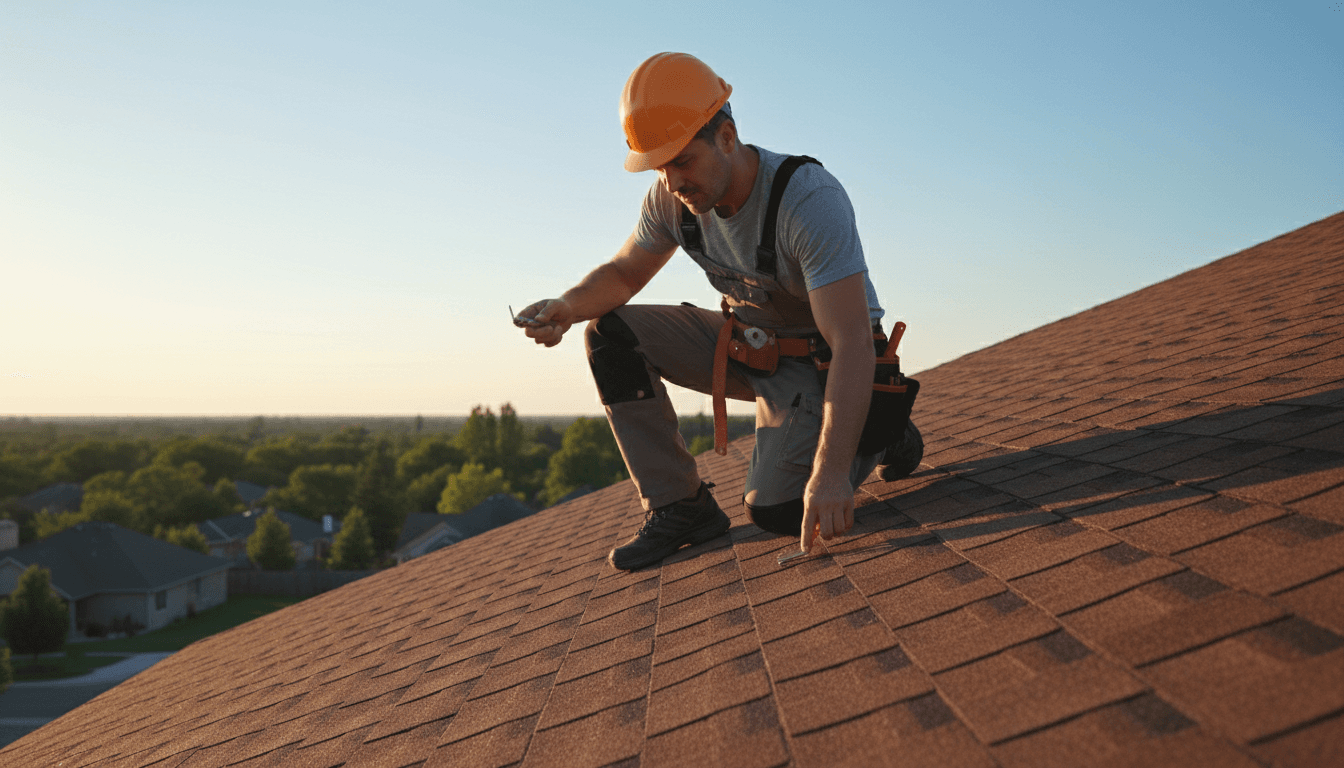
Moving beyond the basic age of the surface, professional inspectors examine the skeleton of your home. They evaluate rafters and trusses to ensure they can handle the additional dead load of a solar array. They also inspect the roof decking from the attic side for signs of mold, rot, or delamination that might not be visible from the shingles alone.
On the exterior, inspectors examine drainage patterns and roof pitch. In North Carolina, heavy seasonal rains can cause water to dam behind solar racking if the layout is not planned correctly. Poorly executed penetrations and flashing are the primary downsides of installing solar panels on a roof; these risks increase significantly if the underlying material is already compromised. If water management fails during a heavy summer storm in Huntersville or Charlotte, the resulting leak is far more difficult to locate and repair under a field of panels.
Orientation and shade are equally critical. In tree-heavy neighborhoods across the Lake Norman area, mature oaks and pines create micro-climates of shade that shift throughout the year. Homeowners should assess debris buildup, such as pine needles and leaves, which can trap moisture under the panels and accelerate shingle degradation. This roofing vs solar homeowner research guide emphasizes that a successful installation requires a roof with the structural integrity to support the system and the drainage capability to survive the local climate. Before committing, take time to compare roofing products and materials to ensure your choice aligns with long-term energy goals.
Solar Panels vs New Roof Cost: What Homeowners Miss in the Math

Analyzing the financial impact of your decision requires looking past today’s invoice and calculating the 10 year and 25 year cost of ownership. The cheapest path today, which is often installing panels on a roof with questionable longevity, frequently becomes the most expensive long term choice. This roofing vs solar homeowner research guide suggests homeowners in Charlotte and the Lake Norman area evaluate five primary cost buckets:
Cost Bucket | Financial Impact |
|---|---|
Roof Replacement | The primary investment in your home’s protection layer. |
Solar Installation | Upfront cost of panels, inverters, and electrical labor. |
Detach and Reset | A future $3,000 to $7,000 fee to remove panels for roofing work. |
Permits & Coordination | Redundant administrative fees if projects are performed years apart. |
Financing Overlap | Total interest paid on separate loans versus one bundled upgrade. |
North Carolina homeowners often overlook the logistical cost of labor coordination and permit redundancies. If you must reroof only five or ten years after a solar installation, you are not just paying for new shingles; you are paying for a solar crew to dismantle the array and a roofing crew to wait for them. This labor friction adds zero value to your home. Bundling these projects, or ensuring the roof is replaced first, eliminates the $3,000 to $7,000 waste of a detach and reset procedure.
Before committing to a budget, take time to compare roofing products and materials to see how different surfacing options affect the total lifetime math of your energy upgrade in Elkin, Mooresville, or Statesville. Financing a single, unified project can also lead to better terms and a clearer path to return on investment, especially when you align the warranty periods of both the shingles and the solar hardware.
What Is the 20% Rule for Solar Panels, and Does It Matter for Your Roof?
Homeowners researching solar often run into a vague phrase, the 20% rule. In practice, there is no single universal 20% roofing rule that determines whether your home can support solar. In this roofing vs solar homeowner research guide, that phrase usually shows up in three different contexts: informal energy offset goals, rough system-sizing conversations, or broad assumptions about usable roof area. None of those replace an actual site-specific review.
What matters for your roof is not a generic percentage. It is the hard project data:
Structural load capacity, based on your framing, decking, and roof condition
Utility rules, including interconnection and net metering requirements
Fire and access setbacks, which can limit how much roof area is available
Production estimates, based on pitch, orientation, shade, and local sun exposure
A solar salesperson may use shorthand early in the process, but homeowners in North Carolina should ask for the engineering basis behind the design. If the roof details are still unclear, compare roofing products and materials first so you are evaluating real roof performance, not a rule of thumb.
Roofing and Solar Together: When a Combined Project Makes More Sense
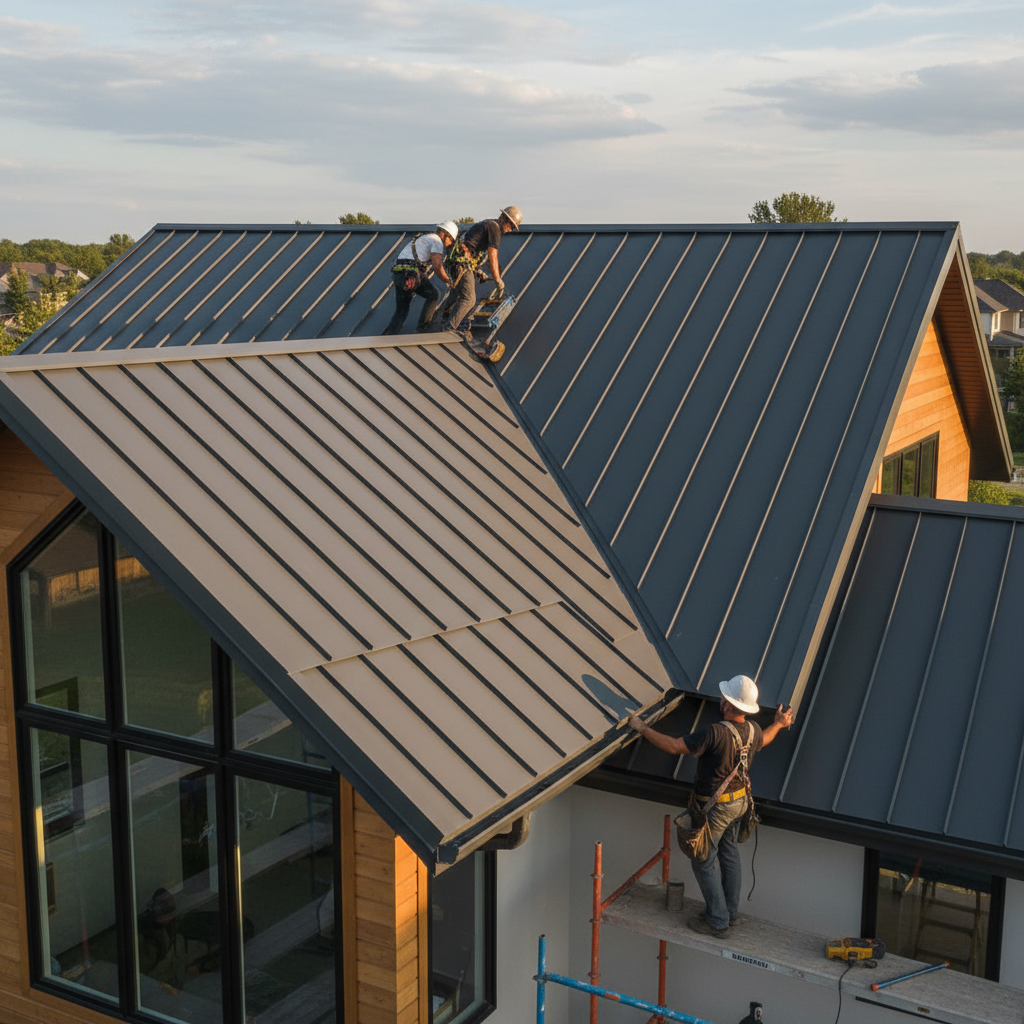
If the roof decision is already leaning toward replacement, a roof and solar combined project often makes more sense than spacing the jobs out. In this roofing vs solar homeowner research guide, the strongest candidates for combining work usually look like this:
The current roof is late-life, but not yet leaking badly
The homeowner expects to stay in the house for many years
Financing or budgeting can be coordinated into one upgrade cycle
A metal roof upgrade is being considered before adding solar
The practical advantage is not just convenience. Combining roofing and solar together can simplify layout planning, flashing details, crew scheduling, and permit timing. It also reduces the odds that you will pay later to remove and reinstall panels because the roof underneath aged out first.
Material choice matters here. Standing seam metal can be attractive for some solar mounting methods because certain clamp systems may reduce roof penetrations. Asphalt shingles are still the most common residential surface in North Carolina, and they can work well for solar if the shingles, decking, and flashing are all in solid condition. If you are comparing long-term options before committing, it helps to compare roofing products and materials so the roof lifespan and solar lifespan are planned together, not guessed separately.
A North Carolina Homeowner Checklist Before Signing Any Solar Contract

If you are close to signing a proposal, pause and run through a final due-diligence list. This is where a roofing vs solar homeowner research guide becomes practical, not theoretical, especially for homes in Charlotte, Mooresville, Statesville, Huntersville, Cornelius, and nearby Elkin where storm timing, tree cover, and aging roofs often change the best sequence.
Get an independent roof inspection before approving any solar scope
Confirm the roof age, shingle or metal product type, and any known repair history
Ask for a written opinion on remaining roof life, not just whether it looks fine
Verify whether solar attachments affect manufacturer warranties or roofer workmanship coverage
Request detach and reset pricing in writing, even if reroofing is not planned today
Check shade patterns in different seasons, especially if mature trees border the property
Review HOA, subdivision, or neighborhood restrictions before design work begins
Compare the roof project timeline and solar timeline against North Carolina storm season and contractor availability
Confirm who is responsible for flashing, penetrations, and leak callbacks
Keep copies of inspection photos, estimates, and warranty documents in one file
Before moving forward, it also helps to compare roofing products and materials so you understand what will be under the array for the next 25 to 30 years. Roofinghut.com is built as a research-first local resource to help North Carolina homeowners avoid costly sequencing mistakes before contracts are signed.
Use Roofinghut Tools Before You Choose Between a Roof Project and Solar

Once your checklist is complete, the next smart move is research, not rushing a contract. Use this roofing vs solar homeowner research guide as a planning step, then learn more about Roofinghut and compare roofing products and materials before locking in either project. Review how asphalt shingles and metal systems differ in lifespan, attachment details, and long-term maintenance under solar.
It also helps to estimate budget ranges first, so you can compare roof-first, solar-first, and combined-project costs with clearer expectations. Reading product reviews and planning around real roof life, not sales timing, usually leads to the better decision.
Balancing roof maintenance with solar installation requires careful timing and a clear understanding of your home's specific needs. When you prioritize proper research and planning, you protect both your investment and property. Navigating structural assessments, permits, and contractor selection can quickly become overwhelming without guidance. If you want expert help to align your roofing timeline with energy goals, our About page explains how we prioritize clear communication and honest assessments. Taking time to evaluate your options today ensures lasting results tomorrow.